

The death of a woman who was killed with a hatchet by her son with autism could potentially have been avoided “with better supports”, the victim’s daughter told the Central Criminal Court.
“I hope he knows his mother loves him still – a mother’s love is unconditional,” Helen Sheehy also told the court in her victim impact statement.
Last month, a unanimous jury found Patrick Dunne not guilty by reason of insanity of bludgeoning his mother Susan Dunne to death after an argument over the purchase of a mobile phone she believed to be too expensive.
In Ms Sheehy’s victim impact statement, read into the record by prosecuting counsel Dominic McGinn SC, she said she “knew nothing” of the lives her mother and Patrick were living.
Ms Sheehy said it was a “very unfortunate outcome between a protective mother and a son looking for his independence” and that “maybe with better supports it could be avoided”.
“Nothing can change what has happened. I feel the same today as the day I heard my mother was dead. Patrick deserves the help and support he needs. I hope he knows his mother loves him still – a mother’s love is unconditional,” she said in her statement.
Mr Dunne’s brother, Anthony Sheehy, said in his statement that his parents separated when he was in his teenage years and that for a long time he did not see his mother.
Mr Sheehy said that the day his father got in touch to tell him his mother was dead was “a devastating one”.
He said that he had intended to move back to Ireland to reconnect with his mother. He said that to “properly heal from that pain I need to forgive”.
He said that he found comfort in his faith and that “one day, we shall see each other again”.
Mr McGinn said consultant psychiatrist Dr Anthony Kearns, of the Central Mental Hospital, reported that Mr Dunne could continue with his treatment.
Ms Justice Mary Ellen Ring said she would order that Mr Dunne continue with his progress in the Central Mental Hospital. She said the case was a “very sad” one and wished Mr Dunne well with his future appropriate treatments.
The jury had heard that Mr Dunne told gardaí in interviews that he “lost it” over the disagreement about the purchase of an iPhone that Ms Dunne believed to be too expensive. Ms Dunne died after suffering six hatchet wounds to the head as she lay in her bed, five of which were fatal.
The jury heard psychiatric evidence that Mr Dunne had “little understanding of the act or its consequences and was unable to refrain” from killing his mother.
They also heard that Mr Dunne felt his mother was controlling him and perceived that she was preventing him from having an independent life.
An expert medical witness gave evidence that there was a culmination of anger in Mr Dunne over his restricted life and the defendant had also stated that he shoplifted the hatchet with the intention of killing his mother.
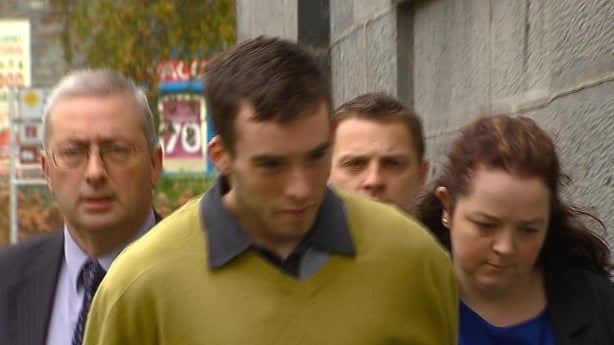
Mr Dunne admitted to killing his mother “without any lawful justification” but psychiatrists for both the prosecution and defence were in agreement that the defendant was insane, as defined by law, at the time of his mother’s death.
Mr Dunne, 28, from Ballingeragh, Lixnaw, Co Kerry, had pleaded not guilty to murdering 62-year-old Susan between 26 and 27 November 2013, both dates inclusive, at the same address.
In a statement that was read into evidence during the trial, postmistress Ann McCarthy said that for the previous three years Ms Dunne would come into the Lixnaw post office with her son on Wednesday mornings to collect his disability allowance.
“Susan would always have his social welfare card in her purse, take it out and give it to Patrick. I would leave the €188 on the counter, she would take it and give him €5 for himself,” she said.
Ms McCarthy said Patrick came into the post office at 10.30am on 27 November and stood in the queue. Her daughter rang her at 10.38am and told her that she had seen Patrick driving a green Corolla car with great difficulty.
“I said it couldn’t be him as he doesn’t drive, she said it was. I was very alarmed when I heard he was driving a car, I knew he shouldn’t be driving a car,” the witness said.
Neighbour Anthony McElhinney testified that his cousin arrived at his house on the morning of 27 November to inform him that something was wrong at the Dunne house.
Mr McElhinney went inside the house and kicked in the locked bedroom door. He said it was clear that Ms Dunne was dead in the bed and that there was blood on the sheets, the wall and blood spatter on the door frame. He rang Lixnaw Garda Station at 11.20am.
Arresting Garda Declan McDonagh said he noticed Ms Dunne’s car parked on Market Street in Listowel that afternoon and went over to it. The garda said he told Patrick that his mother had been found dead when he saw the accused approach the car.
Gda McDonagh arrested Mr Dunne after being notified that the accused had been identified as a formal suspect in the case.
Antonia Boyle BL, for the prosecution, read transcripts of Mr Dunne’s garda interviews to the jury.
In his interviews, Mr Dunne told gardaí that he was “out of control” on the night and had a “bad temper”. He said that he rowed with his mother over the cost of an iPhone and went to his room to listen to music.
He told gardaí that on the night he got up for a drink of water and went to the kitchen where he noticed a hatchet was missing from a wood container. He said he went to his mother’s room to look for it.
Ms Boyle said Mr Dunne told gardaí that it was dark in his mother’s room and that she was asleep when he found it in her room. He told gardaí that he made “a few practice swings” with the hatchet over his mother and “by accident” hit her.
“It wasn’t meant to happen,” he told gardaí.
He then returned to the kitchen with the hatchet and washed off the blood in the sink before drying it and placing it next to the fridge. The hatchet was examined by forensics and blood and hair particles matching Ms Dunne’s were found along with a majority DNA profile for her son, said counsel.
Mr Dunne told gardaí that he was “shocked” by what happened and that “he cried, wishing he could take it back”.
He said he went to bed and in the morning returned to his mother’s bedroom and tapped her three times on the shoulder but she was “gone”.
Of the incident, he repeatedly told gardaí that he “lost it” and that he could not control his temper after becoming upset over the row about the iPhone.
When it was put to Mr Dunne by detectives that the killing was not an accident, Mr Dunne replied: “Not really, no.” However, when asked if the killing was “deliberate”, Mr Dunne said: “Not really. I lost control.”
Detectives told the accused man that the pathology report showed Ms Dunne had been struck by a sharp-edged instrument six times in the back of the head. Mr Dunne then admitted to striking Ms Dunne twice with a two-handed swing of the hatchet before then admitting to gardaí that he struck her four times.
Mr Dominic McGinn SC, for the prosecution, read a statement from State Pathologist Dr Margot Bolster, who said Ms Dunne had sustained six wounds to her head. Five of them were a significant size and were situated behind her right ear.
Dr Bolster recorded that a sharp instrument had penetrated Ms Dunne’s skull, that there had been multiple fractures and that there had been lacerations to her brain tissue. She found that three of the wounds had penetrated the mid-brain area.
She said Ms Dunne’s cause of death was due to multiple blows to the head by a sharp weapon causing brain swelling and laceration.
Defence expert witness Dr Ronan Mullaney told the jury that in his opinion, Mr Dunne was suffering with a mental disorder at the time of his mother’s death and was “unable to appreciate or refrain from a criminal act”.
The defendant was frustrated, angry and overwhelmed, Dr Mullaney said.
The psychiatrist said Mr Dunne felt that his mother was controlling him and that the accused perceived that his mother was preventing him from having any independence regarding a life of his own, friends of his own, socialising, having a girlfriend or contact with his father.
Dr Mullaney said that before Mr Dunne killed his mother, the accused had years of thoughts of doing so and that at the time of her death the accused felt he had “no other choice”.
The expert witness said reports concluded that Mr Dunne had “unrealistic ambitions” in wanting to become “a professional footballer, have a girlfriend and an online fan-club”.
The doctor said there was a culmination of anger in Mr Dunne over his restricted life and the defendant had also stated that he shoplifted the hatchet with the intention of killing his mother.
During the trial, the jury broke deliberations and passed a note to the judge asking if they could inspect the hatchet, which they took to the jury room and returned minutes later.
Mr Dunne told interviewers in the Central Mental Hospital that he regretted what he did and that if “I had had the skills then that I have now my mother would still be alive”.
In interviews, Mr Dunne said he could now see that his mother was trying to protect him, keep him safe and that she did not want to be alone.
Prosecution expert witness Dr Anthony Kearns also said that, in his opinion, Mr Dunne fulfilled “all criteria” to be considered legally insane at the time of his mother’s killing.
He said the accused’s mother was “very protective” of Mr Dunne and she had “significant concerns” about him mixing in the community.
Dr Kearns said that Mr Dunne told him in an interview that he “regretted” the killing and said: “If I had any way to bring her back to life, I’d do it in a second.”
‘Better supports’ could have prevented mother’s death
Source: Viral Trends Report


0 Comments